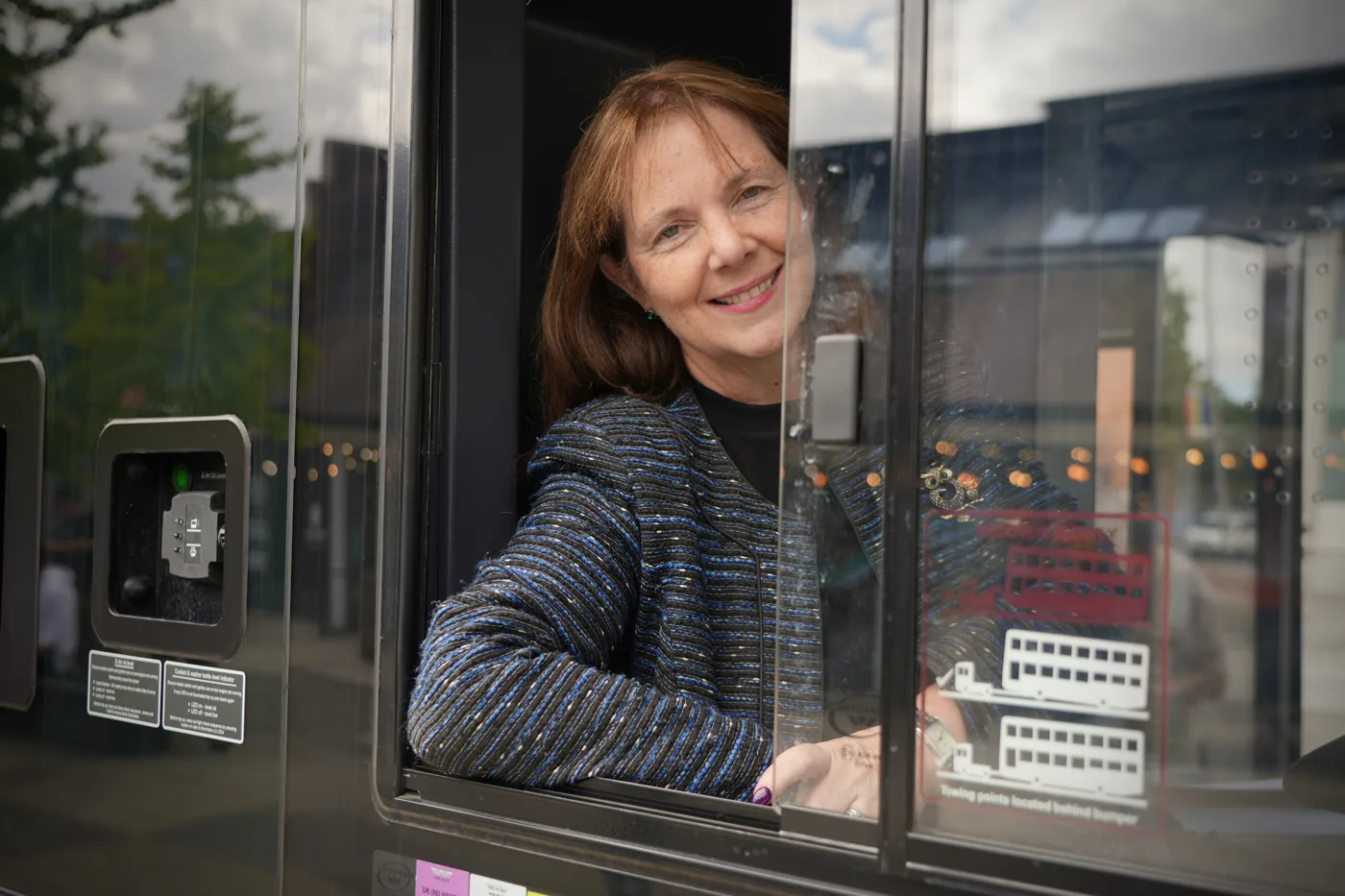

The Mayor of the East Midlands has backed £47.55m for 189 battery-electric buses. Nottingham City Transport would get £3.1m towards 17 of them.
Nottingham City Transport would get £3.1 million towards 17 electric buses and improvements to its Parliament Street depot, under a £47.55 million plan to bring 189 battery-electric buses to Derby, Derbyshire, Nottingham and Nottinghamshire.
The East Midlands Combined County Authority (EMCCA) Board backed the plans on Monday 23 November, with the support of the Mayor of the East Midlands, Claire Ward. The money covers new buses and the charging equipment at depots needed to run them, replacing older diesel vehicles.
Overview
- What: £47.55m from EMCCA towards 189 battery-electric buses and depot charging equipment
- In Nottingham: £3.1m for Nottingham City Transport (17 buses, Parliament Street depot) and part of £28.7m for Trentbarton, which is rebuilding depots in Langley Mill, Nottingham and Derby
- Total value: the four schemes are worth more than £100m, with the operators meeting the rest
- When: work is expected between 2026 and 2029
- Also approved: £20.4m for 44 bus stop and station schemes, and a £53m fund to March 2029 for shelters, stops and pinch points
Where the money goes
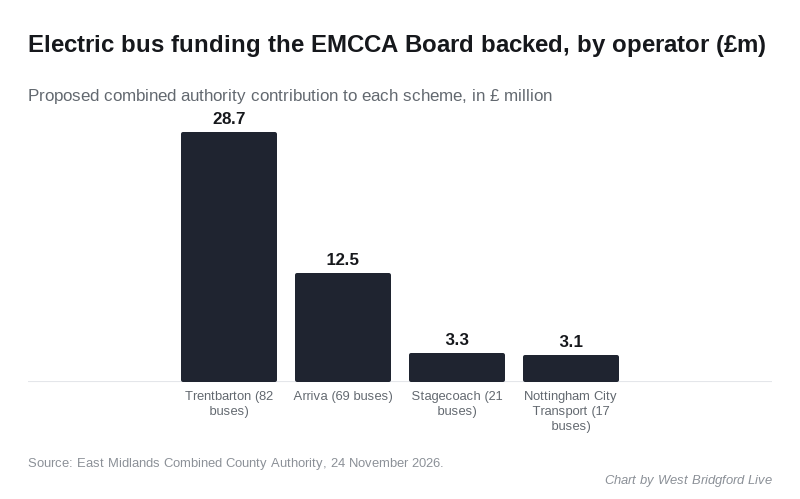
EMCCA’s proposed contributions to the four operators are:
- Trentbarton: £28.7m towards a £55.6m scheme for 82 electric buses and rebuilding its depots in Langley Mill, Nottingham and Derby
- Arriva: £12.5m towards a £34m scheme for 69 electric buses and improvements to its Ascot Drive depot in Derby
- Stagecoach: £3.3m towards an £8.7m scheme in Mansfield, including 21 electric buses
- Nottingham City Transport: £3.1m towards a £9.1m scheme for 17 electric buses and improvements to its Parliament Street depot in Nottingham
What the mayor said
“Buses are part of everyday life for thousands of people across our region,” Ms Ward said. “They get people to work, help students get to college, and make it easier to see friends and family or get to the shops.”
“I want people to have public transport they can rely on, and electric buses mean that fares will not be driven by high fuel prices. They are also cleaner: replacing older diesel buses will cut emissions and improve the air we breathe, while making sure our bus services keep pace with the needs of the people who use them.”
“The East Midlands needs to reach net zero by 2050, and changes like this are how we get there. This investment will allow us to make progress, while supporting better public transport for people across our region.”
Bus stops, lighting and pinch points
The Board also approved £20.4m towards 44 smaller schemes in the Bus Corridor Infrastructure and Customer Experience 2026-27 Capital Programme. These include renewing and expanding real-time passenger information at bus stops and stations, better lighting, audio-visual display equipment and other work on passenger comfort, accessibility and safety.
A further £53m fund, running until March 2029, was approved for an Integrated Transport Measures and Pinch Points Programme. EMCCA says it can pay for bus shelter refurbishment, bus stop improvements, accessibility measures for pedestrians and passengers, passenger information displays, dropped kerbs, traffic signals and bus stop enforcement.
What happens next
EMCCA’s transport team will now produce a delivery plan setting out the programme and the work proposed.
Source: East Midlands Combined County Authority press office (release).
Have your say