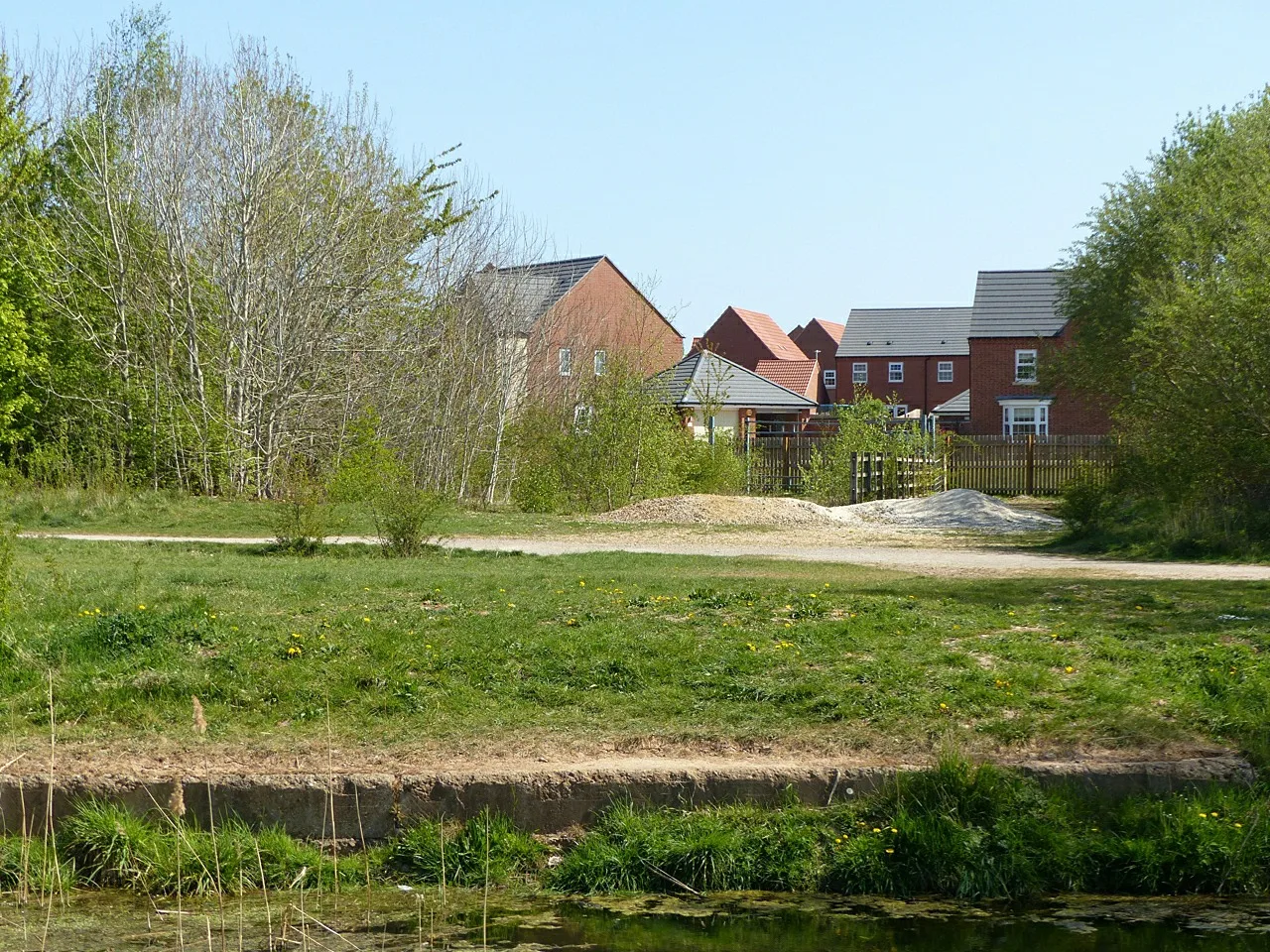

Rushcliffe's housing need is about 890 homes a year, a third above the 664 being examined, and a Green Belt review is on the table. Comments close 23 October.
Rushcliffe Borough Council has started work on a new Local Plan, and its own scoping document already carries the number that will shape the argument for the next three years. The borough’s housing need, calculated by the government’s standard method, is about 890 homes a year.
That is a third more than the 664 a year in the draft Greater Nottingham Strategic Plan that planning inspectors are examining right now. The council does not hide the gap. Its document says the requirement in the new Local Plan “will need to be substantially higher” than the draft figure. It adds that this “is likely to require the identification of additional land to accommodate future growth.” (Rushcliffe Borough Council scoping consultation document, September 2026)
The first round of consultation runs to 5pm on Friday 23 October.
What is actually being asked
This is a scoping consultation, the first stage under the government’s new plan-making system. No sites are on the table yet. The council wants to know what the plan should cover and what people think matters.
There are four formal questions. The two that carry the weight are:
- Question 2: how should future homes, jobs and services be distributed across Rushcliffe, and are there places where growth should be encouraged or limited?
- Question 3: what are your views on the amount of housing growth that should be planned for, and where it should be provided?
Responses go in online, by email to localdevelopment@rushcliffe.gov.uk, or by post to Planning Policy, Rushcliffe Borough Council, Rushcliffe Arena, Rugby Road, West Bridgford, NG2 7YG. Hard copies are at the Customer Service Centre and in public libraries. (Rushcliffe Borough Council, 18 September)
A separate Call for Sites, when landowners and developers put land forward, comes later. The council makes the point that submitting a site does not mean it gets allocated.
The gap between 664 and 890
Two different numbers are in play, and they are not alternatives so much as a before and after.
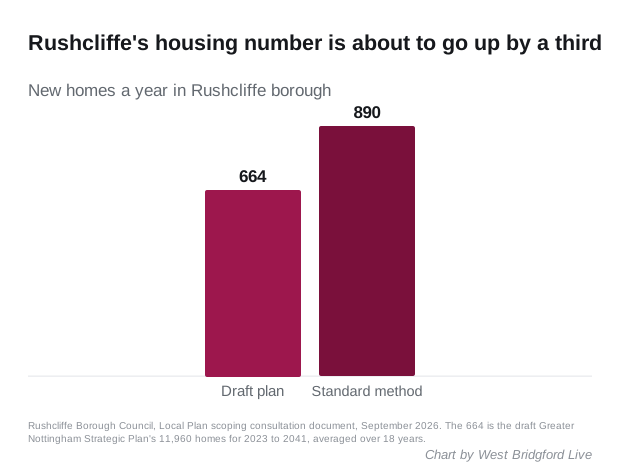
The 664 comes from the draft Greater Nottingham Strategic Plan, which covers Rushcliffe, Broxtowe and Nottingham City to 2041. It sets a draft requirement of 11,960 new homes in Rushcliffe between 2023 and 2041, an average of 664 a year over the 18 years. That plan was published in draft in March 2025 and is still being examined, so the figure could change.
The 890 is the current standard method assessment of local housing need. Until the East Midlands Combined County Authority produces a Spatial Development Strategy for Derbyshire and Nottinghamshire, the Local Plan has to set the borough’s requirement itself, using that method.
Not all of it needs new land. The council says around 13,000 homes are already expected on sites that have planning permission or are allocated in the adopted plan. Those will keep delivering. The question the plan has to answer is how much more is needed on top.
Green Belt is explicitly in scope
Around 40% of Rushcliffe is in the Nottingham-Derby Green Belt, and the document lists “whether a review of Green Belt land is required” among the things the spatial strategy must consider. It is one line in a long document, and it is the line most likely to matter in Edwalton, Tollerton, Keyworth and the villages along the A606 and A52.
The council sets out the approaches it may weigh up:
- focusing growth within or next to the Nottingham urban area, the towns and the larger villages, with limited growth elsewhere
- spreading growth across a wider range of towns and villages
- strategic urban extensions, new settlements or other large-scale options
- some combination of these
West Bridgford is the borough’s largest settlement, with around 43,000 of Rushcliffe’s roughly 127,000 residents, and the document treats it as part of the Nottingham urban area rather than as a free-standing town.
The eight guidance documents that will disappear
One change has had no coverage at all and has direct consequences for the borough’s biggest building sites.
Rushcliffe’s current plan is supported by eight Supplementary Planning Documents. Under the new plan-making system, SPDs can no longer be prepared, and the existing ones lose their status when a new Local Plan is adopted. Two of the eight govern the largest allocations in the borough:
- East of Gamston / North of Tollerton Development Framework
- Melton Road Edwalton Development Framework
The others are the Design Code, Developer Contributions, Affordable Housing, Low Carbon and Sustainable Design, Wind Energy, and the East Midlands Freeport Strategic Infrastructure and Contributions documents.
The council says it will have to decide which guidance from them should be written into the Local Plan itself, or carried over into the new “Supplementary Plans” the system allows. Those are narrower in scope, covering site-specific matters such as masterplans and design codes.
Reorganisation is paused, the plan is not
The government’s plan to replace Nottinghamshire County Council, Nottingham City Council and the nine districts with two unitary authorities from April 2028 was paused on 7 September 2026 and is under review. The council says the scope of that review “is unclear at the current time.”
It is carrying on regardless, and says government guidance is clear that reorganisation should not delay Local Plan preparation. We covered the pause and what it means for the May 2027 elections in our report on the reorganisation timetable.
The timetable to 2029
| Stage | Date |
|---|---|
| Notice of intention to commence | 30 June 2026 |
| Scoping consultation (this one) | 17 September to 23 October 2026 |
| Gateway 1, self-assessment published | 31 October 2026 |
| Plan content and evidence consultation | 17 May to 28 June 2027 |
| Gateway 2, inspector’s advice | 5 September 2027 |
| Proposed Local Plan consultation | 15 May to 10 July 2028 |
| Gateway 3, inspector’s advice | 4 September 2028 |
| Submission for examination | 2 October 2028 |
| Adoption | 30 April 2029 |
The 30-month clock starts at Gateway 1 in late October. The plan replaces both halves of the current framework: the Core Strategy adopted in 2014, which only runs to 2028, and the Land and Planning Policies document adopted in 2019.
What it means for you
- The deadline is 5pm on Friday 23 October. Responses at this stage are about principles and priorities, not individual fields, so an objection to a specific site has nowhere to land yet.
- If you want to influence where growth goes, Questions 2 and 3 are the ones to answer. Saying which places should take more and which should take less is exactly what the council has asked for.
- Watch for the Call for Sites. That is when land near your street can be put forward, and it is the stage at which most people first hear about a proposal.
- The Green Belt line is worth reading closely if you live on the edge of West Bridgford, Edwalton, Tollerton, Keyworth or one of the villages.
- Nothing here changes a current planning application. For live applications see our West Bridgford planning news page.
The council also notes what the plan cannot do. The latest National Planning Policy Framework introduced National Decision-Making Policies, and Local Plans are not supposed to duplicate or restate them. Policies should generally be limited to those needed to deliver allocated sites or to address a clearly evidenced local issue.
The housing picture behind the number
The document sets out why the borough is under pressure:
- Rushcliffe’s population grew by around 15% between 2011 and 2024, mostly through housebuilding, and unevenly across the borough
- nearly 75% of households are owner-occupiers, against 63% nationally
- house prices run at roughly eight to nine times average earnings
- the share of residents of pensionable age is growing faster than the national average
- affordability pressure is sharpest in the rural parts of the borough
Our own reporting on Rushcliffe house prices tracks the Land Registry figures behind that affordability point month by month.
Related
- Rushcliffe reorganisation paused and the May 2027 election
- West Bridgford town council: the petition and the review
- West Bridgford planning news
- Rushcliffe house prices
Sources
- Rushcliffe Local Plan scoping consultation document (PDF), Rushcliffe Borough Council, September 2026
- Give your views on preparation of new Local Plan in Rushcliffe, Rushcliffe Borough Council, 18 September 2026
- New Rushcliffe Local Plan consultation page, Rushcliffe Borough Council
Have your say